Món Ngon
Hướng Dẫn Chi Tiết Cách Nấu Bánh Chưng Bằng Tiếng Anh
Bánh Chưng, một món ăn biểu tượng và không thể thiếu trong mỗi dịp Tết Nguyên Đán của Việt Nam, không chỉ là một món ăn mà còn là biểu tượng của văn hóa, truyền thống và sự sum vầy gia đình. Việc chia sẻ nét đẹp văn hóa ẩm thực này với bạn bè quốc tế ngày càng trở nên phổ biến. Bài viết này của cholaithieu.com sẽ cung cấp cho bạn một hướng dẫn toàn diện về cách nấu bánh chưng bằng tiếng anh, giúp bạn tự tin giới thiệu món ăn truyền thống này tới những người bạn nói tiếng Anh hoặc tự mình thực hiện theo một công thức chuẩn quốc tế. Từ nguyên liệu đến từng bước chế biến, mọi thứ đều được trình bày rõ ràng, dễ hiểu.
Tại Sao Cần Biết Cách Nấu Bánh Chưng Bằng Tiếng Anh?
Có thể bạn quan tâm: Cách Nấu Bánh Chưng Ngon Chuẩn Vị Gia Truyền Cho Ngày Tết
Trong một thế giới ngày càng kết nối, việc chia sẻ văn hóa ẩm thực đã trở thành một cây cầu quan trọng để gắn kết con người. Đối với người Việt, Bánh Chưng không chỉ là một món ăn mà còn là cả một câu chuyện về truyền thống, về lòng biết ơn đối với đất trời và tổ tiên. Khi bạn biết cách nấu bánh chưng bằng tiếng anh, bạn không chỉ đơn thuần là truyền đạt một công thức nấu ăn; bạn đang mở ra một cánh cửa để bạn bè quốc tế hiểu sâu sắc hơn về phong tục, tập quán và ý nghĩa thiêng liêng của ngày Tết Việt Nam.
Việc có một bộ hướng dẫn chi tiết bằng tiếng Anh giúp:
* Giáo dục và Chia sẻ Văn hóa: Là công cụ tuyệt vời để giới thiệu một phần không thể thiếu của di sản Việt Nam đến với cộng đồng quốc tế, đặc biệt là những người chưa từng trải nghiệm Tết Việt.
* Hỗ trợ Cộng đồng Người Việt Hải Ngoại: Nhiều người Việt sống xa quê hương muốn giữ gìn truyền thống và có thể cần một công thức chuẩn để hướng dẫn con cháu hoặc bạn bè không nói tiếng Việt.
* Phục vụ Khách Du Lịch và Người Nước Ngoài Yêu Ẩm Thực: Những người nước ngoài có hứng thú với ẩm thực Việt Nam hoặc muốn tự mình khám phá món ăn này sẽ rất cần một tài liệu hướng dẫn rõ ràng, chính xác.
* Tăng Cường Kỹ Năng Ngôn Ngữ: Đối với những người muốn luyện tập tiếng Anh trong ngữ cảnh thực tế, việc học và trình bày một công thức nấu ăn phức tạp như Bánh Chưng là một thử thách thú vị và bổ ích.
Không chỉ dừng lại ở việc nấu nướng, việc giải thích ý nghĩa của từng nguyên liệu, từng bước gói ghém, và quá trình nấu bánh hàng giờ đồng hồ cũng là một cách tuyệt vời để kể câu chuyện về sự kiên nhẫn, lòng thành kính và tình yêu thương gia đình gắn liền với món bánh này. Vì vậy, việc trang bị kiến thức về cách nấu bánh chưng bằng tiếng anh là một kỹ năng giá trị, mở rộng khả năng giao tiếp và chia sẻ những giá trị văn hóa độc đáo của Việt Nam.
Banh Chung: A Culinary Masterpiece of Vietnamese Tet

Có thể bạn quan tâm: Hướng Dẫn Cách Nấu Bánh Chưng Nhanh Nhất Đơn Giản Tại Nhà
Banh Chung (pronounced “banh choong”) is more than just a dish; it’s the very soul of Vietnamese Lunar New Year (Tet). This traditional glutinous rice cake, wrapped in large green leaves and boiled for many hours, symbolizes the earth, prosperity, and gratitude towards ancestors. Its square shape represents the Earth, a traditional belief in Vietnamese culture, while its ingredients—glutinous rice, mung beans, and pork—are staples of Vietnamese agriculture, signifying the bounty of the land. Preparing Banh Chung is often a communal family activity, beginning days before Tet, filled with stories, laughter, and the passing down of traditions from elders to younger generations. The arduous process of cleaning leaves, preparing fillings, wrapping, and boiling deepens family bonds and reinforces cultural identity. It is truly a culinary masterpiece that encapsulates the spirit of Vietnamese Tet.
Essential Ingredients for Banh Chung

Có thể bạn quan tâm: Cách Nấu Bánh Flan Caramel Ngon Mềm, Đơn Giản Tại Nhà
To successfully master the cách nấu bánh chưng bằng tiếng anh, understanding each ingredient and its role is paramount. The beauty of Banh Chung lies in the simplicity and harmony of its core components, which are transformed into a rich, savory, and satisfying experience.
- Glutinous Rice (Gạo nếp): This is the foundation of the Banh Chung. You’ll need about 1 kg (2.2 lbs) of high-quality glutinous rice. It’s crucial to select sticky rice varieties that cook to a tender yet firm consistency. The rice should be soaked in water for at least 8-10 hours, or preferably overnight, before cooking. This ensures even cooking and a soft texture. After soaking, drain it thoroughly. Some recipes suggest adding a pinch of salt to the rice after soaking to enhance its flavor.
- Mung Beans (Đỗ xanh): Approximately 200-300g (7-10 oz) of hulled mung beans are required. Like the rice, mung beans need to be soaked, ideally for 4-6 hours, to soften them. Once soaked, drain and steam or boil until very tender. Mash them into a smooth paste. Season the mashed mung beans with salt, black pepper, and sometimes a dash of fish sauce to create a savory filling. Some families also mix in a little sugar for a subtle sweetness.
- Pork Belly (Thịt ba chỉ): A generous slab of pork belly, around 400-500g (14-17 oz), is the heart of the savory filling. Choose pork belly with a good balance of lean meat and fat, as the fat renders during the long cooking process, infusing the rice with incredible flavor and moisture. Cut the pork belly into long, thick strips, about 2-3 cm (1 inch) wide and 10-15 cm (4-6 inches) long. Marinate the pork with fish sauce, black pepper, a little sugar, and sometimes minced shallots or garlic for at least 30 minutes, or even overnight, to allow the flavors to penetrate deeply.
- Black Pepper (Hạt tiêu): Freshly ground black pepper is essential for seasoning both the mung bean and pork fillings, adding a pungent kick that balances the richness of the other ingredients.
- Salt (Muối): Used to season the rice, mung beans, and pork.
- Fish Sauce (Nước mắm): A staple in Vietnamese cuisine, fish sauce provides umami depth to the pork and mung bean fillings.
- Dung Leaves (Lá dong) or Banana Leaves (Lá chuối): These are the traditional wrapping materials. Lá dong are preferred for their beautiful green color and unique aroma imparted to the bánh. However, they can be hard to find outside Vietnam. Banana leaves are a good substitute and are more widely available. You’ll need a significant quantity, about 20-30 large leaves. The leaves must be thoroughly washed and then softened by either briefly blanching them in hot water or wiping them with a damp cloth and gently passing them over a flame (or leaving them in the sun) to make them pliable and less prone to tearing during wrapping. The central vein of the leaf should be removed.
- Lắc (Bamboo String) or Kitchen Twine: Used to tie the Banh Chung securely. Traditionally, bamboo strings are made from split bamboo, but strong kitchen twine can be used as a convenient alternative. You’ll need about 4-6 pieces of string per bánh.
These carefully selected ingredients, when combined and cooked meticulously, yield the distinctive flavor and texture that makes Banh Chung such a cherished Vietnamese delicacy.
Tools and Equipment You’ll Need
Successfully preparing Banh Chung, especially when following cách nấu bánh chưng bằng tiếng anh, requires specific tools beyond standard kitchen utensils. Having the right equipment makes the process much smoother and ensures a beautifully shaped and well-cooked bánh.
- Large Pot (Nồi to): A very large stockpot is indispensable. Banh Chung requires a long simmering time (10-12 hours, sometimes more), and the cakes need to be fully submerged in water throughout. A traditional Vietnamese clay pot (nồi đất) is sometimes used, but a heavy-bottomed metal stockpot capable of holding several liters of water and multiple bánh is most common. Ensure it’s large enough for all your Banh Chung to fit comfortably without being too cramped.
- Banh Chung Mold (Khuôn gói bánh chưng): This is highly recommended, especially for beginners or those aiming for perfectly square cakes. Traditional molds are made of wood or metal, typically around 15-20 cm (6-8 inches) per side. The mold helps in compacting the ingredients and forming the characteristic square shape, which is often difficult to achieve freehand. While optional, it greatly simplifies the wrapping process.
- Large Basin or Bowl: For soaking glutinous rice and mung beans. You’ll need separate large containers for each.
- Steamer (Xửng hấp): Useful for pre-cooking the mung beans. A standard kitchen steamer basket placed over boiling water will work.
- Mashing Tool (Dụng cụ nghiền): A potato masher or a fork is needed to mash the cooked mung beans into a smooth paste.
- Sharp Knife: For cutting pork belly and processing leaves.
- Cutting Board: For preparing ingredients.
- Kitchen Towels: For drying soaked rice and wiping leaves.
- Long Tongs or Ladle: For safely handling hot Banh Chung during cooking and for checking water levels.
- Clean Cloth/Sponge: For wiping down leaves.
- Heat-Resistant Gloves: For handling hot leaves and packages.
Having these tools ready before you begin will streamline the complex process of making Banh Chung, allowing you to focus on the art of wrapping and cooking this iconic Vietnamese dish.
Step-by-Step Guide to Making Banh Chung
The process of making Banh Chung is an intricate dance of preparation, wrapping, and slow cooking. Follow this detailed cách nấu bánh chưng bằng tiếng anh to create your own traditional Vietnamese Banh Chung.
Preparing the Rice (Gạo nếp)
- Soak: Rinse 1 kg (2.2 lbs) glutinous rice thoroughly under cold water until the water runs clear. Place the rice in a large bowl and cover with plenty of fresh water. Soak for 8-10 hours, or ideally overnight, at room temperature.
- Drain & Season: After soaking, drain the rice very well using a colander. Let it sit for about 30 minutes to ensure most of the water has dripped off. In a large bowl, mix the drained rice with 1-2 teaspoons of salt. Ensure the salt is evenly distributed.
Preparing the Mung Beans (Đỗ xanh)
- Soak: Rinse 200-300g (7-10 oz) hulled mung beans. Place them in a bowl, cover with water, and soak for 4-6 hours.
- Cook: Drain the soaked mung beans. Steam them until very tender, usually about 15-20 minutes. Alternatively, boil them in water until soft, then drain.
- Mash & Season: While still warm, mash the cooked mung beans into a smooth paste using a potato masher or fork. Mix in 1 teaspoon of salt and 1/2 teaspoon of freshly ground black pepper. Some people add a dash of fish sauce for extra flavor. Divide the mung bean paste into portions (one for each bánh).
Preparing the Pork Belly (Thịt ba chỉ)
- Cut: Cut 400-500g (14-17 oz) pork belly into thick strips, roughly 2-3 cm (1 inch) wide and 10-15 cm (4-6 inches) long.
- Marinate: In a bowl, combine the pork strips with 1 tablespoon fish sauce, 1 teaspoon sugar, 1/2 teaspoon black pepper, and optionally 1-2 cloves of minced garlic or shallots. Mix well and marinate for at least 30 minutes, or cover and refrigerate overnight for deeper flavor.
Preparing the Lá Dong (Dung Leaves) or Banana Leaves (Lá chuối)
- Clean: Wash the leaves thoroughly under cold water to remove any dirt.
- Soften: For Lá dong, remove the tough central vein. For both types, blanch them briefly in hot water (about 1 minute) or gently pass them over a low flame to make them pliable. This prevents them from cracking during wrapping. Wipe them dry with a clean cloth.
- Cut: For Lá dong, you’ll need large rectangular pieces. For banana leaves, cut them into large rectangles, discarding the tough central rib.
The Art of Wrapping Banh Chung
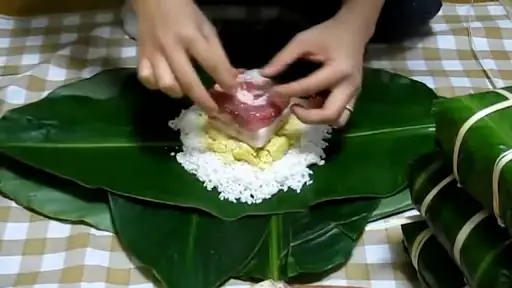
This is where the Banh Chung mold comes in handy.
- Set up the mold: Place the mold on a clean, flat surface.
- Layer the leaves: Arrange 4-6 layers of leaves inside the mold. Typically, you’ll use two large outer leaves (shiny side down) crisscrossing each other, then two smaller inner leaves (shiny side up) positioned to cover the gaps. The key is to create a watertight lining.
- First Rice Layer: Spread a layer of glutinous rice (about 1/4 of your total rice) evenly at the bottom of the leaf-lined mold.
- Mung Bean Layer: Place a portion of mashed mung beans on top of the rice.
- Pork Layer: Arrange 1-2 strips of marinated pork belly on top of the mung beans.
- Second Mung Bean Layer: Cover the pork with another portion of mashed mung beans.
- Top Rice Layer: Add another layer of glutinous rice (about 1/4 of your total rice) to completely cover the mung beans and pork. Press down gently to compact.
- Fold the Leaves: Carefully fold the leaves over the filling, one by one, to create a tight, square package. Start with the longest leaves, folding them neatly.
- Remove from Mold: Once the leaves are folded, gently remove the Banh Chung from the mold.
- Tie Securely: Use 4-6 pieces of bamboo string or kitchen twine to tie the Banh Chung. First, tie two strings across the diagonal to secure the shape. Then, tie two more strings across the middle of each side to reinforce it. The strings should be tight but not so tight that they cut into the bánh. Repeat for all Banh Chung.
The Long Simmering Process
- Prepare the Pot: Place a layer of leftover leaf scraps (or a small rack) at the bottom of your large pot to prevent the bánh from sticking or burning.
- Arrange Banh Chung: Carefully arrange the wrapped Banh Chung inside the pot. They should fit snugly but not be forced.
- Add Water: Fill the pot with enough hot water to completely submerge all the Banh Chung. Ensure the water level remains above the cakes throughout the entire cooking process.
- Boil: Bring the water to a rolling boil over high heat.
- Simmer: Once boiling, reduce the heat to a steady simmer. Cover the pot and cook for a minimum of 10-12 hours. Traditionalists often cook for 14-16 hours for a truly soft and tender Banh Chung.
- Maintain Water Level: Throughout the cooking process, regularly check the water level. Add boiling water as needed to keep the bánh fully submerged. Do not add cold water, as this can affect the cooking process.
- Check Doneness: After the required cooking time, carefully remove one Banh Chung. If it’s firm and dense, and the leaves have turned a dark greenish-brown, it’s likely done.
- Press & Cool: Once cooked, remove all Banh Chung from the pot. Rinse them briefly under cold water to clean the surface and prevent the leaves from sticking. Place them on a clean, flat surface and apply even pressure (e.g., with a heavy cutting board topped with weights) for several hours (4-6 hours) to compress them, squeeze out excess water, and firm up their shape. This step is crucial for texture and preservation.
Tips for a Perfect Banh Chung
Achieving a perfectly cooked Banh Chung, especially when navigating the steps in English, can be a rewarding experience. Here are some expert tips to ensure your efforts yield delicious results:
- Quality Ingredients are Key: Always choose the best glutinous rice, fresh mung beans, and good quality pork belly. The flavor of your Banh Chung heavily depends on the freshness and quality of its components. For instance, using older, drier rice might require longer soaking or result in a harder texture.
- Thorough Soaking: Do not skimp on soaking time for both rice and mung beans. Proper soaking ensures that these ingredients cook evenly and become soft and tender, which is essential for the Banh Chung’s texture. Undersoaked ingredients will remain hard even after long boiling.
- Season Generously: Don’t be afraid to season the rice, mung beans, and pork adequately. The long cooking process can mute flavors, so a well-seasoned filling will result in a more delicious bánh. Taste the mung bean mixture before wrapping to adjust salt and pepper.
- Tight Wrapping: A tightly wrapped Banh Chung prevents water from seeping in during boiling, helps maintain its shape, and contributes to a firm, dense texture. If using a mold, press down firmly. If wrapping freehand, practice makes perfect! Loose wrapping can lead to a watery, crumbly bánh.
- Maintain Water Level: This is perhaps the most critical step during boiling. The Banh Chung must remain fully submerged in water throughout the entire cooking process. If they are exposed to air, those parts will not cook properly, resulting in hard spots. Always add boiling water when topping up, not cold water, to avoid shocking the bánh and disrupting the cooking.
- Long and Slow Simmering: Patience is a virtue when making Banh Chung. The 10-12 (or even 14-16) hours of simmering are essential for the rice to fully cook, the pork fat to render, and all the flavors to meld together. Rushing this step will result in undercooked or less flavorful bánh.
- Proper Pressing: The pressing step after boiling is not just for shape; it also squeezes out excess water, making the Banh Chung firmer and enhancing its shelf life. Place heavy objects (like bricks or large water bottles) evenly on top of the pressed bánh.
- Practice Makes Perfect: Banh Chung making is an art passed down through generations. Don’t be discouraged if your first attempt isn’t flawless. With each batch, you’ll refine your technique, especially in wrapping.
By paying attention to these details, your cách nấu bánh chưng bằng tiếng anh will lead to a Banh Chung that is not only delicious but also a beautiful representation of Vietnamese culinary tradition.
How to Serve and Store Banh Chung
Once your Banh Chung are beautifully cooked and pressed, understanding how to serve and store them properly is crucial to fully enjoy this traditional delicacy.
Serving Banh Chung
Banh Chung is traditionally served warm or at room temperature. The method of cutting is almost as ceremonial as the making itself:
- Unwrap: Carefully remove the strings and outer leaves. The cooked leaves should have imparted a lovely green hue and subtle aroma to the rice.
- Cut: The traditional way to cut Banh Chung is using the very strings that tied it. Place two strings crisscross on top of the bánh. Press down firmly to cut the cake into four triangular or square portions. Alternatively, use a sharp, non-stick knife, dipping it in hot water between cuts to prevent sticking.
- Presentation: Serve Banh Chung with various accompaniments to enhance its rich flavors:
- Pickled Onions (Dưa hành) or Pickled Cabbage (Dưa cải): These sour and crunchy pickles provide a refreshing contrast to the richness of the bánh, cutting through the fattiness of the pork.
- Fish Sauce (Nước mắm): A small bowl of diluted fish sauce with chili can be offered for dipping, adding an extra layer of savory and spicy notes.
- Vietnamese Pork Sausage (Giò lụa) or Head Cheese (Giò thủ): Often served alongside Banh Chung, these add more texture and protein to the meal.
- Fried Banh Chung: A popular way to enjoy leftover Banh Chung is to slice it and pan-fry until golden brown and crispy on the outside. This creates a delightful contrast in texture and flavor.
Storing Banh Chung
Proper storage is key to keeping Banh Chung fresh and safe to eat for an extended period, especially since a batch often yields multiple cakes.
- Room Temperature (Short-term): If consumed within 1-2 days, Banh Chung can be stored at cool room temperature, preferably in a well-ventilated area. Keep them wrapped in their original leaves or in plastic wrap to prevent drying.
- Refrigeration (Medium-term): For longer storage, up to 1 week, refrigerate the Banh Chung. Wrap them tightly in plastic wrap or aluminum foil to prevent them from absorbing odors from other foods and to maintain moisture. Before serving, you can steam or microwave slices to warm them up.
- Freezing (Long-term): Banh Chung freezes exceptionally well, allowing you to enjoy them for up to 3-4 months. Slice the bánh into individual portions, wrap each slice tightly in plastic wrap, then place them in an airtight freezer bag or container. When ready to eat, thaw in the refrigerator overnight, then steam, microwave, or pan-fry until heated through. Frying frozen slices directly (without thawing) can also yield a wonderfully crispy exterior.
Remember that any Banh Chung left exposed to air or stored improperly can quickly spoil, so always ensure they are well-wrapped and stored at appropriate temperatures. Enjoying Banh Chung is a celebration of flavor and tradition, and proper handling ensures that joy lasts.
Common Pitfalls to Avoid
Even with a detailed cách nấu bánh chưng bằng tiếng anh, beginners can encounter common issues. Being aware of these pitfalls will help you avoid them and achieve a successful Banh Chung.
- Undersoaked Rice/Mung Beans: If the rice or mung beans are not soaked long enough, they will remain hard and undercooked even after hours of boiling. This results in a gritty, unpleasant texture. Always adhere to the recommended soaking times.
- Loose Wrapping: A loosely wrapped Banh Chung is prone to absorbing too much water during boiling, making it soggy and losing its shape. The filling might also separate. Ensure all leaf layers are tight, and the strings are securely tied.
- Insufficient Water During Boiling: This is a critical mistake. If the Banh Chung are not fully submerged in water throughout the entire cooking process, the exposed parts will not cook properly and will remain hard. Always monitor the water level and replenish with boiling water as needed.
- Rushing the Boiling Process: Banh Chung demands patience. Trying to shorten the boiling time will result in undercooked rice and pork. The long, slow simmer is what breaks down the rice starch and pork fat, creating the signature tender and cohesive texture.
- Not Pressing After Boiling: Skipping the pressing step leads to a Banh Chung that is less firm, retains too much water, and has a shorter shelf life. Pressing compacts the cake, expels excess moisture, and sets its shape.
- Using Cold Water to Top Up: Adding cold water to the boiling pot can shock the Banh Chung, potentially making the rice harder or affecting its texture. Always use pre-boiled hot water when replenishing the pot.
- Over-Seasoning or Under-Seasoning: While generous seasoning is good, too much salt can make the bánh unpalatable. Conversely, too little seasoning results in a bland cake. Taste the mung bean and pork marinades before wrapping to adjust.
- Damaged Leaves: If the leaves used for wrapping are torn or not properly softened, they can crack during wrapping or boiling, allowing water to enter and spoil the Banh Chung. Always inspect and prepare leaves carefully.
By being mindful of these common mistakes, you can significantly increase your chances of making a perfect Banh Chung that is both delicious and visually appealing, reflecting the true spirit of Vietnamese culinary tradition.
Lời Khuyên Từ cholaithieu.com
Việc tự tay chế biến Bánh Chưng, đặc biệt là theo hướng dẫn cách nấu bánh chưng bằng tiếng anh, không chỉ là một trải nghiệm ẩm thực mà còn là hành trình khám phá và kết nối văn hóa sâu sắc. Tại cholaithieu.com, chúng tôi luôn tin rằng ẩm thực là cầu nối tuyệt vời nhất để chia sẻ câu chuyện và giá trị truyền thống. Đừng ngại thử nghiệm và đừng quá lo lắng về sự hoàn hảo ngay từ lần đầu tiên. Món Bánh Chưng ngon nhất chính là món bánh được làm bằng tất cả tấm lòng và sự kiên trì. Hãy xem quá trình này như một cách để bạn hiểu hơn về sự tinh tế trong ẩm thực Việt, và chia sẻ niềm vui ấy với những người xung quanh.
Bánh Chưng, với hương vị đậm đà và ý nghĩa sâu sắc, chắc chắn sẽ là một món ăn đáng nhớ trong bất kỳ bữa tiệc hay dịp lễ nào. Hãy tự tin thực hành, và bạn sẽ sớm trở thành một “đầu bếp Bánh Chưng” thực thụ, có thể giới thiệu món ăn này một cách tự hào bằng tiếng Anh đến bạn bè khắp nơi trên thế giới.
Bất kể bạn đang tìm kiếm công thức để tự làm, hay muốn tìm hiểu cách nấu bánh chưng bằng tiếng anh để chia sẻ với người thân quốc tế, hy vọng bài viết này đã cung cấp cho bạn những thông tin hữu ích và động lực để bắt đầu hành trình ẩm thực đầy ý nghĩa này. Chúc bạn thành công và có những chiếc Bánh Chưng thơm ngon, chuẩn vị!